
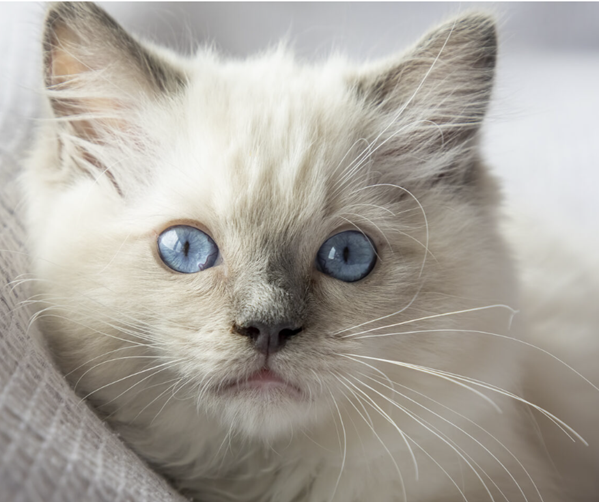
Ragdolls are big, beautiful, and — let’s be honest — they know a good meal when they see one. Keeping their diet on track is one of the most important things you can do for their long-term health, and it doesn’t have to be complicated!
Quality is everything
Look for a high-protein cat food appropriate for your cat’s life stage — kitten, adult, or senior formulas are each calibrated for different nutritional needs. Ragdolls are large-boned and muscular, so protein-rich food helps them maintain that strong, healthy frame. Whether you choose dry food, wet food, or a combination of both, the first ingredient should be a real, named protein (chicken, turkey, salmon — you get the idea), not a filler.
Watch the portions
Here’s the thing about Ragdolls: they love to eat, and they’re not always great at self-regulating. Free-feeding (leaving a bowl out all day) can quietly lead to weight gain, which puts stress on their joints and heart over time. Scheduled meals twice a day with measured portions gives you a much better handle on how much they’re actually eating. If you’re unsure about portion size, your vet can give you a personalized recommendation based on your cat’s current weight and ideal weight.
Fresh water, always
Cats aren’t always great at drinking enough water on their own, and Ragdolls are no exception. A clean, fresh water source is non-negotiable. Many cats prefer moving water — a pet fountain can be a game-changer if your Ragdoll seems to ignore the bowl.
Treats and supplements
Treats are totally fine in moderation, but keep them to a small percentage of daily calories — Ragdolls will happily overindulge if you let them! If your cat has a dull coat or excessive shedding, an omega-3 fatty acid supplement (vet-approved) can do wonders. As always, check with your vet before adding anything new.